

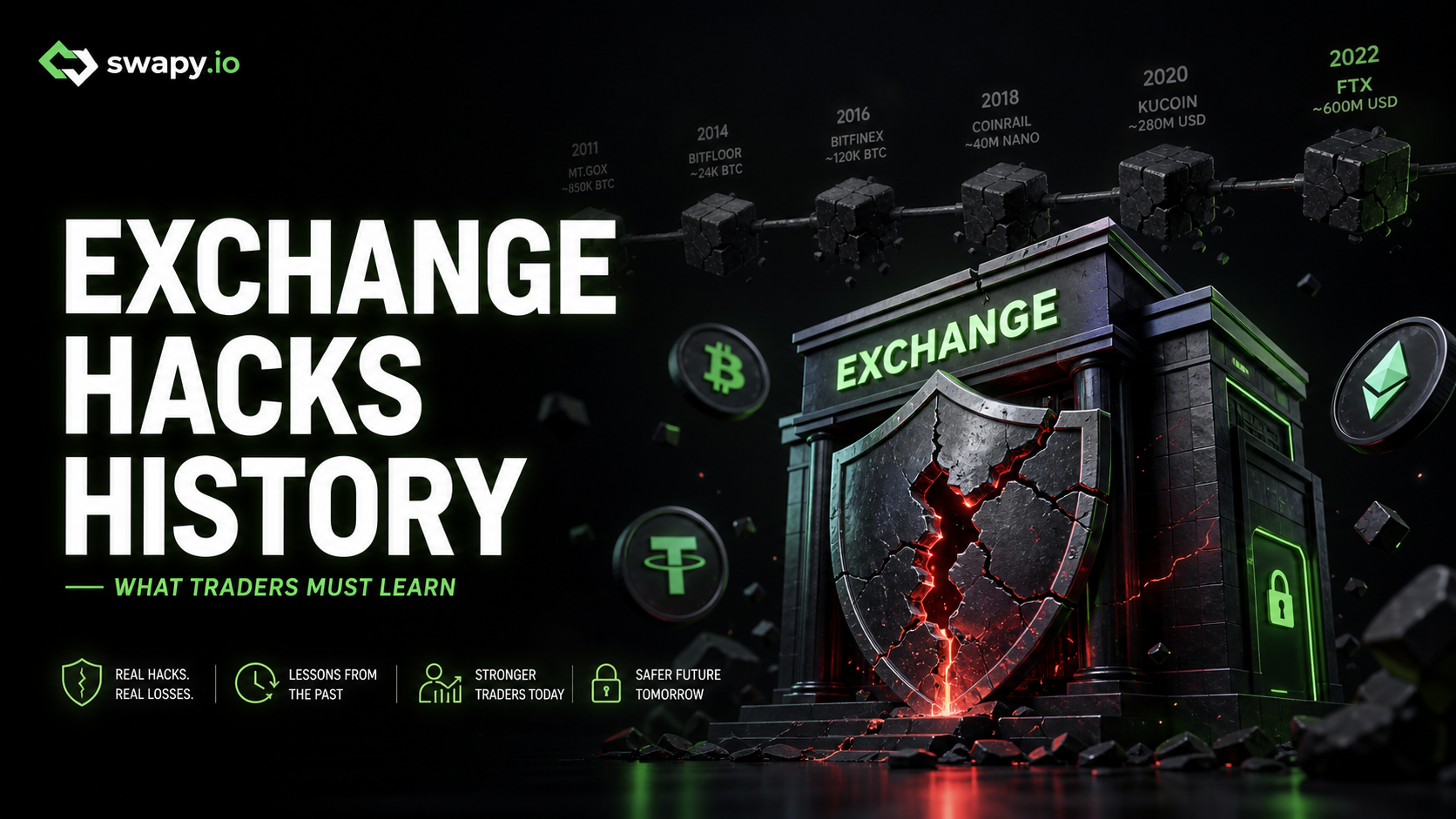
Exchange Hacks History 2026: What Crypto Traders Can Learn From the Biggest Breaches
The history of crypto exchange hacks shows one clear lesson: if you keep large balances on centralized platforms, you are taking exchange risk as well as market risk. From Mt. Gox to Coincheck, Bitfinex, Coincheck, FTX, and Bybit, the biggest losses in crypto history usually came from hot wallets, stolen keys, or weak operational security.
Why Exchange Hacks Matter
Exchange hacks are not just old stories. They shaped how crypto users think about custody, security, and self-control of assets.
Every major breach pushed the industry toward better storage practices, more audits, and stronger security policies. For traders using Swapy.io, this is a reminder that fast swaps are useful, but long-term funds should not stay on an exchange-style wallet longer than necessary.
Major Hack Milestones
 Common Attack Patterns
Most exchange hacks follow a few repeatable patterns. Attackers target hot wallets because they are online and easier to reach than cold storage.
Other common routes include phishing, malware, stolen admin access, API key leaks, and bridge exploits. In several major cases, the problem was not the blockchain itself but weak key management and operational control around it.
What Traders Should Learn
The most important lesson is simple: custody matters. If your funds are sitting on a centralized platform, your risk includes hacking, frozen withdrawals, internal failure, and operational collapse.
That is why many experienced users keep trading balances small and move long-term assets into secure wallets. A setup that combines Hardware Wallets Guide, Multi-Sig Wallets, and Secure Trading Habits is much safer than leaving everything in one place.
Practical Protection Rules
-
Keep only active trading funds on a platform.
-
Move savings to hardware wallets or multi-sig storage.
-
Use separate wallets for different risk levels.
-
Verify deposit and withdrawal addresses carefully.
-
Prefer audited, reputable services.
-
Avoid trusting one wallet or one platform for everything.
For Swapy.io users, the takeaway is to use the exchange-like convenience of swaps without adopting exchange-like custody habits. That means swap when needed, then secure the result.
Final Take
Exchange hacks history is really a history of custody mistakes, not just technical exploits. The biggest losses usually came from poor wallet structure, weak key protection, or overcentralized control.